
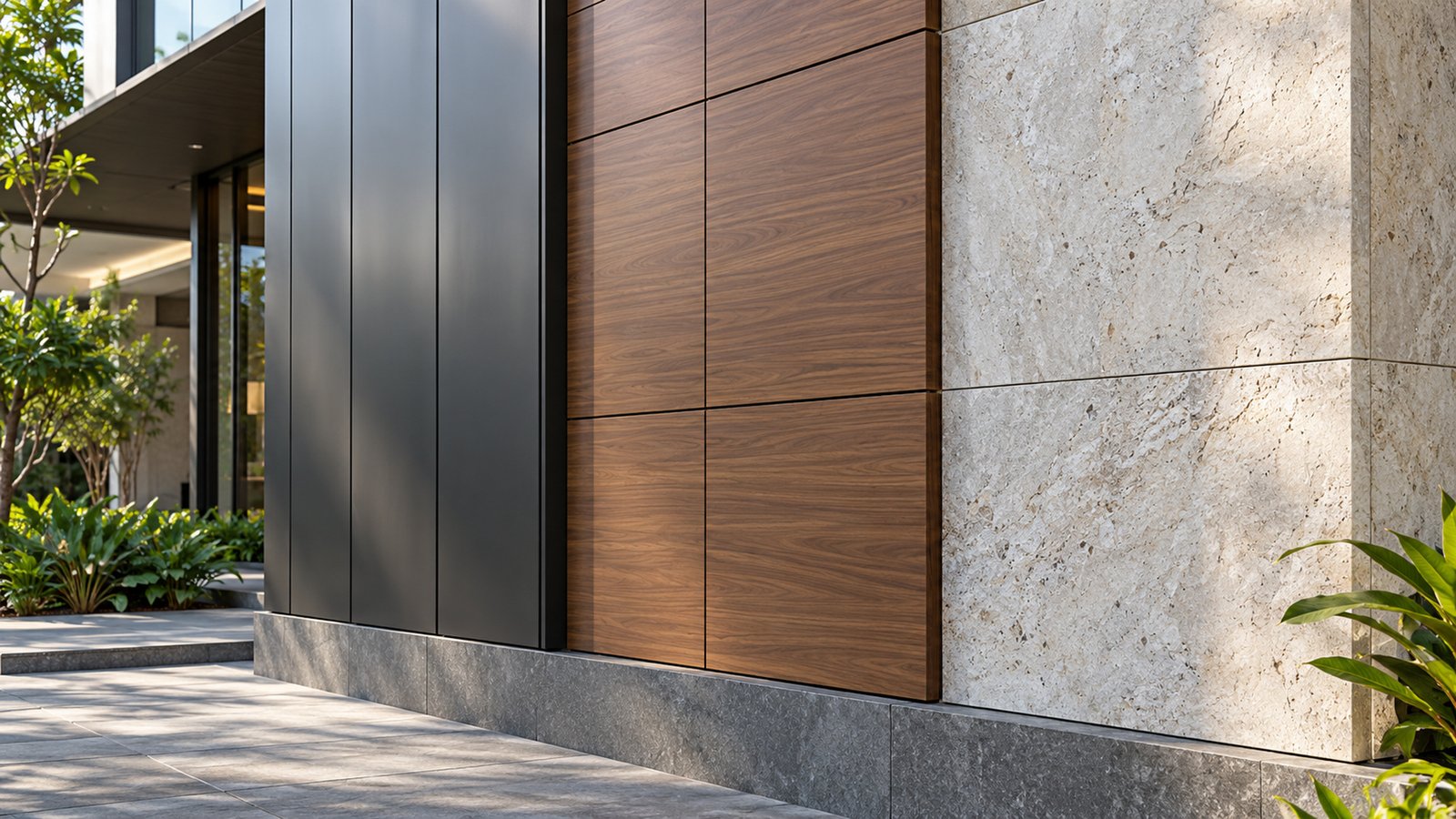
There is no single best exterior cladding material. Metal, HPL and stone each create a different architectural character and need to be assessed against the building, support conditions, local exposure and the intended level of maintenance.
Compare the visual character first
Metal can be formed into panels, profiles, screens and patterned surfaces. HPL is often considered where a flat, finished board appearance suits the design. Stone brings natural variation and weight. Start by asking how the material should read at street level and close range, rather than treating them as interchangeable finishes.
Look behind the visible surface
Every cladding choice needs a suitable support and edge strategy. Corners, openings, joints, drainage and transitions to other materials deserve early attention. The right comparison is not simply material against material; it is one complete wall build-up against another.
Consider care in the actual setting
Dust, rain, sun, staining risk and access affect how an exterior should be cared for. Ask the supplier or contractor for the recommended cleaning and inspection approach for the proposed product and finish. Avoid promises about maintenance that are not tied to the specific system.
Make the decision with samples
Place physical samples next to the other selected exterior materials. This helps reveal differences in colour, reflection, texture and scale that are easy to miss on a screen. A project team can then choose a material direction with a clearer understanding of the finished composition.
Next step
Use the Absteras finishes and facade-system pages to discuss a metal direction that suits your building.
Related Absteras pages
Frequently Asked Questions
Is metal cladding only for commercial buildings?
No. Metal systems can be considered for residential and commercial projects when the design and detailing suit the building.
Can stone and metal be used together?
Yes. Their junction, support and visual balance should be planned as part of the elevation.
How should I compare maintenance?
Ask for the care requirements of the specific proposed material, finish and site conditions.
Why are samples important?
They show real texture, colour and reflection alongside the other exterior materials.