
You can modernise an existing house exterior without rebuilding the whole structure by focusing on the facade areas that most affect proportion, entry, shade and street presence. Start with what is already working, then make the intervention deliberate.
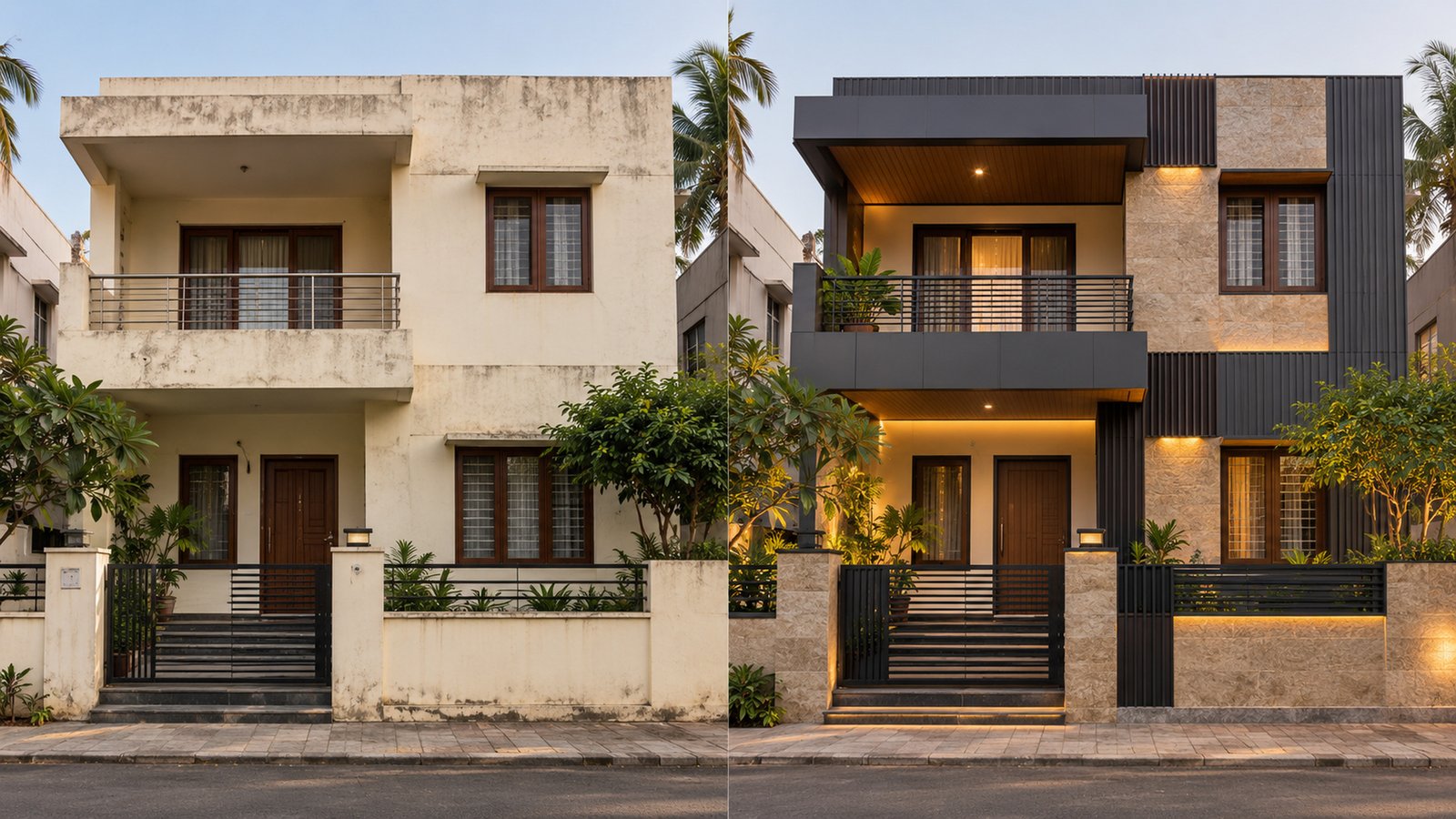
Document the existing facade first
Take measured photographs of the frontage, openings, balconies, entrance and service areas. Note existing materials, visible damage and elements that cannot move. This creates a better basis for deciding where a new frame, screen, panel field or finish would make a real difference.
Choose one or two strong moves
A new entry surround, balcony screen, vertical bay or revised colour palette can change the way a house reads from the street. Too many unrelated additions can make a renovation feel busier rather than more coherent. Let the building’s original structure guide the new composition.
Use metal where it has a purpose
Metal cladding, profiles or screens can add a clean line, privacy or depth. They should relate to existing windows, parapets and gates. Plan the junctions carefully so the result feels integrated rather than attached as an afterthought.
Check site realities early
Renovation work has its own access, protection and sequencing questions. Discuss these with the project team before decisions are final. A site visit or detailed record of the existing facade can reveal constraints a reference image cannot show.
Next step
Share current photos and elevations with Absteras to discuss a focused facelift for your home.
Related Absteras pages
Frequently Asked Questions
Can I update only one part of my facade?
Yes. A focused intervention can work well when it relates clearly to the overall elevation.
Should I copy another house facade?
Use references to explain your preference, then develop a design around your own building.
Can screens help with an existing balcony?
They can be considered where privacy, shade or a visual update is needed, subject to project-specific detailing.
What information helps a renovation discussion?
Current photographs, dimensions or drawings, location and a clear description of what you want to improve.