
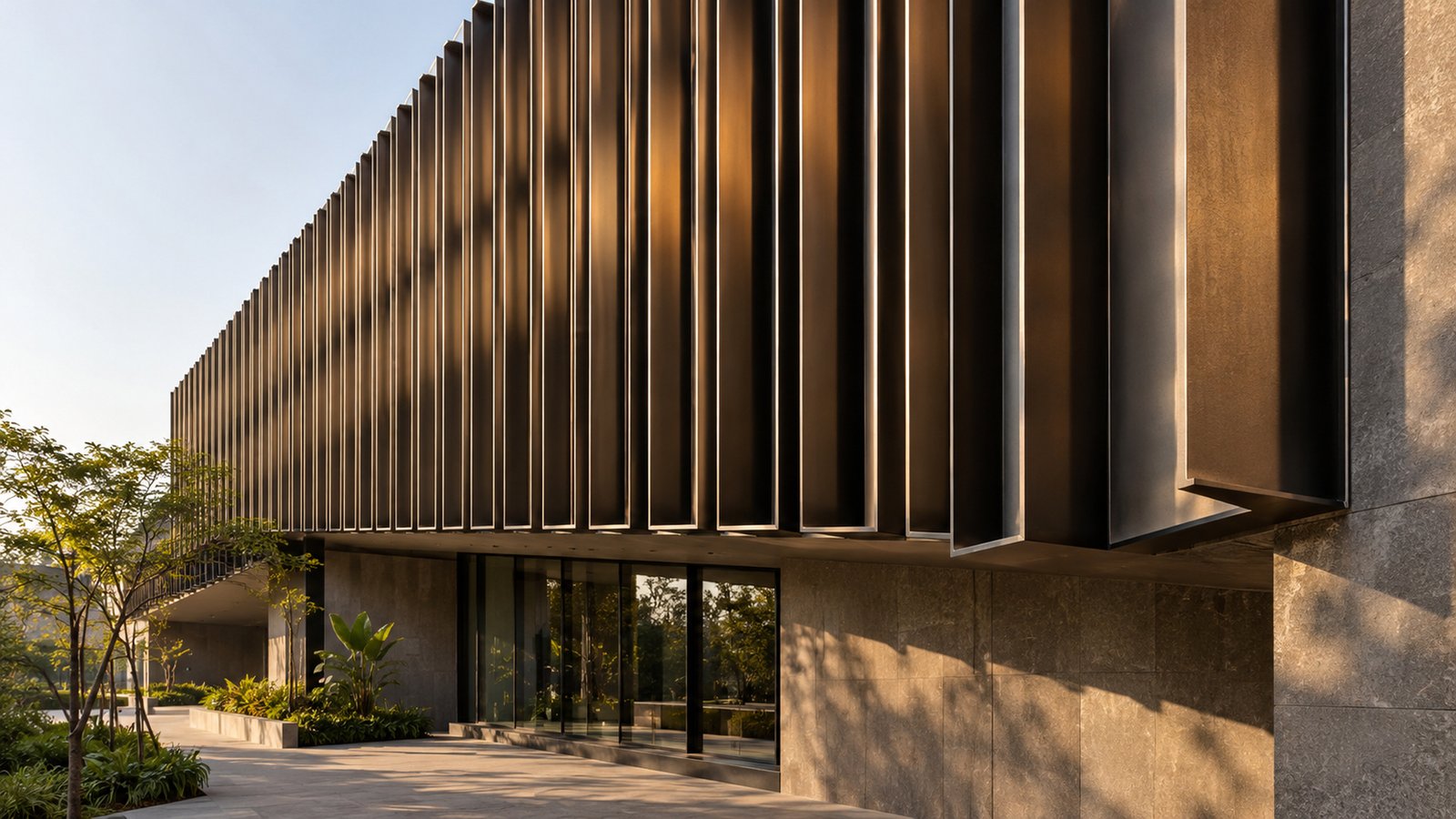
A C-channel facade uses repeated metal profiles to create a linear surface with depth and shadow. The final effect depends on profile proportion, spacing, direction, finish and the way the channels meet openings and corners.
Use the direction to support the building
Vertical channels can make a facade feel taller, while horizontal lines may emphasise width or balcony levels. The chosen direction should reinforce the building's proportions rather than fight them. Start by studying the complete elevation, not a small sample alone.
Set a repeat that reads at the right scale
Channel width, depth and spacing determine whether the surface appears calm, fine or bold. Check the pattern from close range and the main street view. A repeat that looks balanced in a drawing can become too busy or too flat once it covers a full wall.
Resolve windows, corners and terminations early
The quality of a linear facade is often most visible at its interruptions. Decide how channels begin and end, how they turn a corner and how their rhythm meets window reveals, parapets and adjacent materials. These details help the pattern remain intentional.
Treat finish and support as design decisions
Colour and texture influence how shadows and joints read across the surface. The backing, fixing approach and tolerances should be developed with the visible profile, then confirmed through drawings and an appropriate sample.
Next step
Explore Absteras C-channel facade systems and share your elevation to discuss a linear cladding direction.
Related Absteras pages
Frequently Asked Questions
What is a C-channel facade?
It is a facade treatment made from repeated channel-like metal profiles that create a linear surface.
Can C-channels run vertically or horizontally?
Either direction can be considered according to the building proportion and desired visual effect.
Why do corner details matter?
They determine whether the repeated pattern remains clean and continuous as the elevation changes direction.
Should I approve a sample?
A sample can help confirm profile scale, finish and the way shadows read before wider fabrication.