
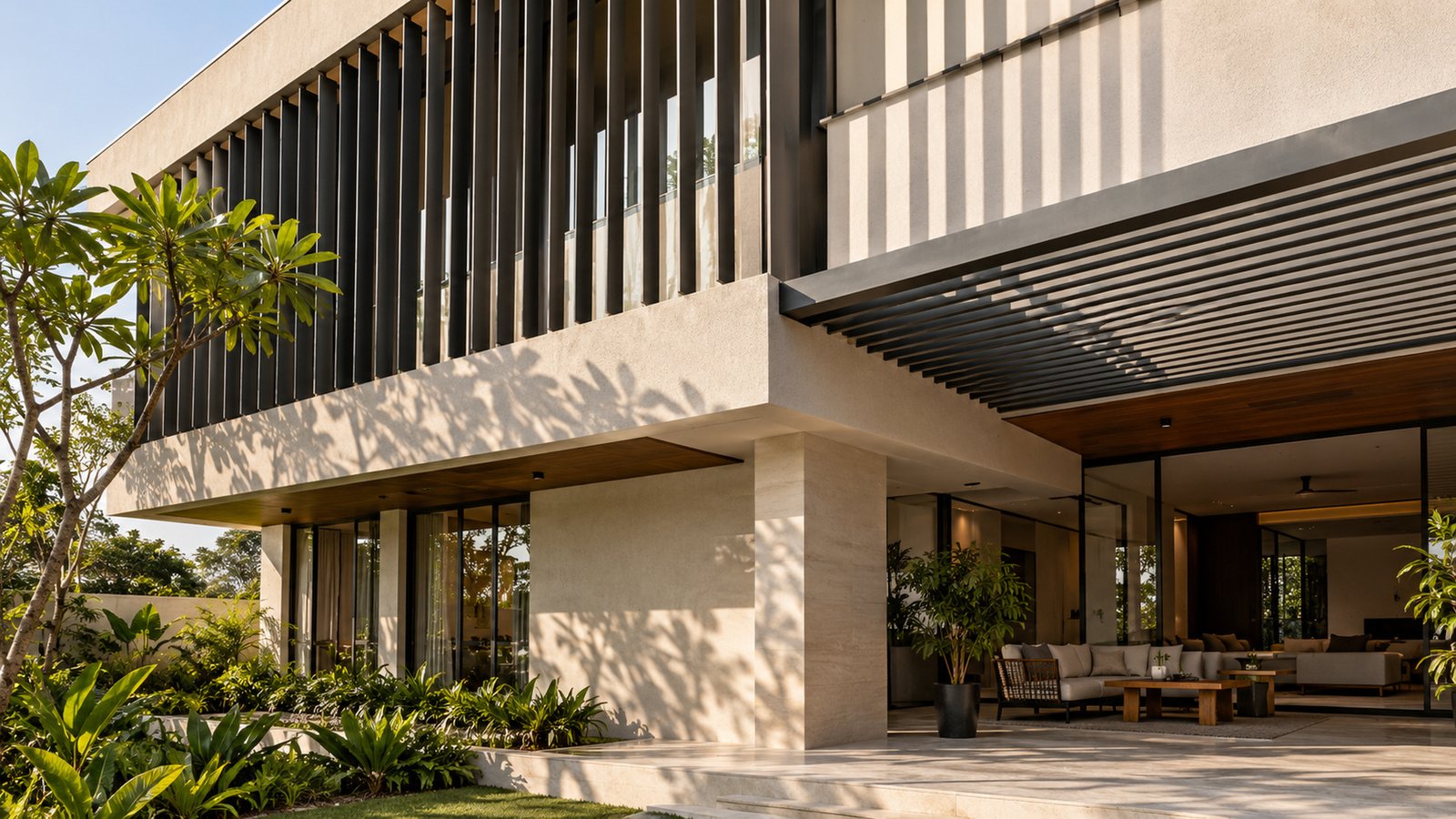
Architectural louvers can provide shade, screen selected views and give an elevation a strong rhythm. Their performance and appearance depend on depth, spacing, orientation and the specific openings they serve.
Start with sun and sightlines
Before choosing a louver profile, identify where direct sun and overlooking views matter. The goal may be shade over a window, privacy at a balcony or a consistent facade rhythm. These are different jobs and may need different arrangements.
Set the louver scale for the building
Deep, widely spaced louvers create a bolder expression. Finer profiles can form a more delicate screen. Test the proposal at the distance a passer-by sees it and from inside the rooms behind it. A facade can appear more open from one angle than another.
Coordinate supports and edges early
The visible louver pattern depends on its support system. Connections, end conditions and transitions at corners or windows should be part of the design discussion. This avoids an otherwise clean elevation being interrupted by improvised details.
Choose finish as part of the composition
Finish changes how profiles catch light and relate to frames, walls and glass. Review a physical sample with the proposed adjacent materials. The right choice should suit the building’s design direction and the care expected for the site.
Next step
Explore Absteras architectural louvers and share the relevant elevation, orientation and privacy needs.
Related Absteras pages
Frequently Asked Questions
Can facade louvers provide privacy?
They can screen selected views, depending on the profile, spacing, angle and viewpoint.
Do louvers block all daylight?
Not necessarily. They can be designed to balance screening and daylight for a specific opening.
Are louvers only for windows?
No. They can frame openings, create balcony screens or form a larger feature surface.
Why does orientation matter?
Sun direction and viewing angles influence which layout is worth studying.